Running one site is hard. Running ten, fifty or two hundred is a different game entirely, because the thing that breaks first is visibility. When you can’t see what’s happening on every floor, in every shift, problems hide until they show up in the numbers, and by then they’ve already cost you.
The fix isn’t more reports. It’s tracking a small set of operational KPIs in real time, so you can act while it still matters. Here are the seven that matter most for multi-location operators.
1. Task completion rate
The single most important operational metric: what percentage of scheduled tasks, opening routines, safety checks, cleaning, closing, were actually completed, on time, with proof? A site that drifts below your threshold is an early-warning signal long before it shows up in sales or complaints.
Track completion by site, department and shift. The outliers tell you exactly where to coach.
2. Compliance score
For regulated operations, compliance isn’t optional, but it’s often invisible until an audit. A live compliance score (food-safety logs completed, temperatures in range, mandatory checks signed off) turns audit prep from a scramble into a non-event. With digital checklists, this score builds itself from the work your team already does.
3. On-time attendance
Late opens and understaffed peaks quietly erode service and sales. Tracking on-time clock-ins, verified with geofenced attendance, shows you punctuality by site and by person, and feeds cleaner data straight into payroll.
4. Issue resolution time
How long does it take from “the fridge is failing” to “the fridge is fixed”? Logging incidents and requests with timestamps lets you measure resolution time and spot the sites, or the equipment, that keep causing problems.
5. Inspection pass rate
Trust, but verify. Your inspection pass rate, how often completed work actually meets standard when audited, reveals whether your numbers reflect reality or just box-ticking. A high completion rate with a low inspection pass rate means you have a quality problem, not an execution one.
6. Labor cost vs. demand
Overstaffing burns margin; understaffing burns guests. Comparing scheduled labor against actual demand (covers, transactions, reservations) shows where smart scheduling can tighten the gap, often the fastest path to a healthier P&L.
7. Cross-location consistency
The ultimate multi-site KPI: how much do your locations differ? When you can compare completion, compliance and performance across outlets, cities and regions side by side, you can lift the laggards toward the leaders, and protect the brand experience everywhere.
Turning KPIs into action
Metrics only matter if someone acts on them. The operators who win do three things:
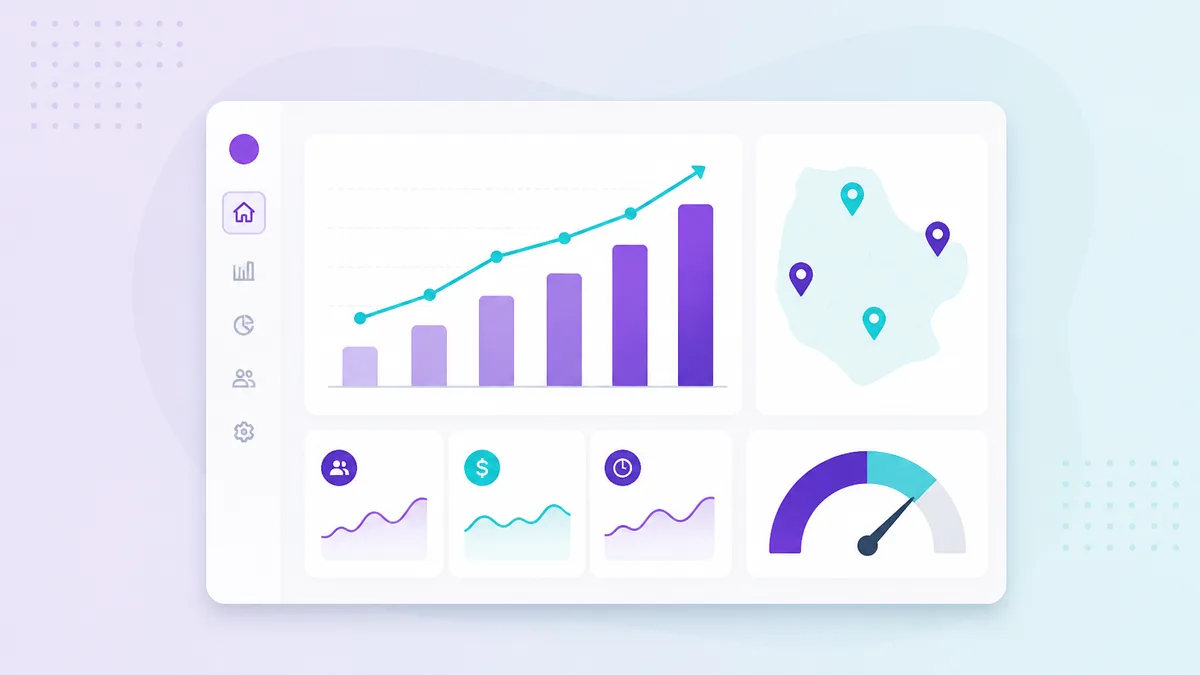
- Make the data live. Weekly reports are too slow. An executive dashboard that updates as work happens lets you intervene the same day.
- Make ownership clear. Every KPI needs an owner at every level, site, region, HQ.
- Review on a rhythm. A short weekly review of the same handful of metrics beats an occasional deep-dive nobody reads.
You don’t need a data team to start. You need the right operational data captured consistently, and a single place to see it. That’s exactly what Opscale is built for.
See how the executive dashboard brings these KPIs together, or book a demo and we’ll map them to your operation.