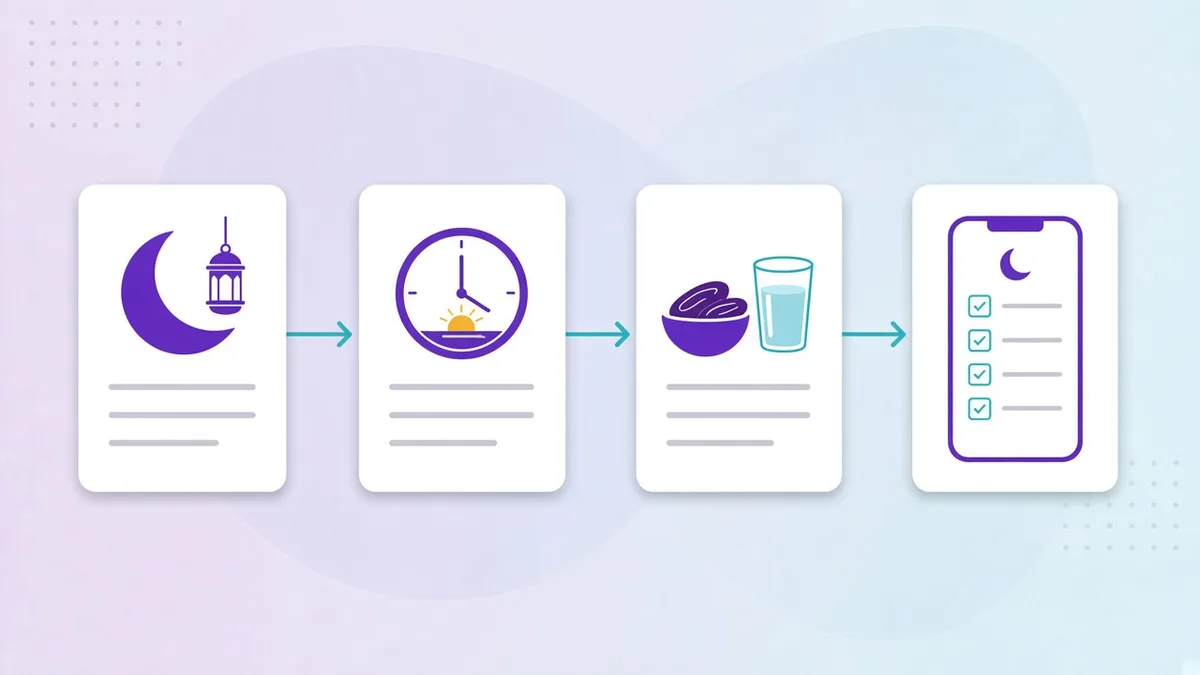


Ramadan changes everything about how a restaurant runs in the Gulf: when guests arrive, how long service lasts, how many hours staff can work and what the busiest hour of the day is. For a single venue, an experienced manager adapts on instinct. For a group across several cities, the month is the hardest scheduling problem of the year.
This guide sets out a practical approach to Ramadan staff scheduling for restaurants, cafés and cloud kitchens in Saudi Arabia, the UAE and the wider GCC, and how to keep operating standards steady while the schedule flips.
Working-hour rules differ by country and change over time. Confirm the current regulations with your labour authority or legal adviser before publishing schedules.
What changes during Ramadan
- Demand moves to two peaks. Iftar at sunset is an intense, time-boxed rush; suhoor stretches into the early hours. Daytime dine-in falls sharply, while delivery often rises.
- Working hours are reduced. GCC labour laws reduce daily working hours for Muslim employees during Ramadan (for example, Saudi labour law sets six hours a day or thirty-six a week; the UAE reduces the standard working day by two hours). Schedules that ignore this create compliance and morale problems.
- Operating hours shift later. Many venues open mid-afternoon and close after midnight, or run split shifts around iftar.
- Fasting staff need different shift patterns. Energy and concentration vary across the day; the pre-iftar hour is when teams are most stretched.
- Deliveries, prep and cleaning move. Suppliers change their hours; prep often happens in the late afternoon rather than the morning.
- Eid follows. The final days of Ramadan and the Eid holiday bring their own spike and staff leave requests.
A scheduling approach that holds up
1. Build a Ramadan template, separately from the standard week
Don’t edit the regular rota into shape. Create a dedicated Ramadan schedule template with the new opening hours, the iftar and suhoor peaks and the reduced daily hours built in. In Opscale scheduling, templates can be duplicated per branch and adjusted for local sunset times and local demand.
2. Staff to the peaks, not the day
Map expected covers and delivery orders by hour for the first week, then schedule:
- A pre-iftar surge team arriving about two hours before sunset for prep, set-up and the rush.
- A core evening team for post-iftar dine-in and delivery.
- A suhoor team that starts late and closes, with a clear closing checklist.
Keep daytime staffing lean and focused on prep, receiving and deep cleaning.
3. Respect reduced hours, and make it visible
Enter the reduced daily maximum into the schedule so the system flags any shift that exceeds it. Split shifts can comply with the hour limit while covering both peaks, but they need clear rest periods and must be fair across the team. Publish the schedule early, and let staff request swaps through the app rather than the group chat.
4. Use attendance data, not memory
Late arrivals and no-shows have an outsized effect when every shift is built around a 30-minute rush. A geofenced time clock shows who’s actually on site in real time, so a manager can act before iftar rather than find out after.
5. Move the daily routines with the hours
Opening and closing checklists, fridge checks and cleaning schedules must follow the new operating window. A fridge check scheduled for 7 a.m. to an empty kitchen will be missed every day. Shift the recurring tasks to the Ramadan hours, add a specific pre-iftar readiness check, and keep food-safety logs running through the late-night service.
6. Watch the dashboard across cities
Riyadh, Jeddah and Dubai do not break at the same minute. A cross-site dashboard showing attendance, task completion and exceptions by branch lets a regional manager spot the branch that’s short-staffed at 5 p.m. and fix it, rather than discovering it in the next day’s reviews.
7. Plan Eid before Ramadan starts
Collect Eid leave requests in the first week of Ramadan, decide operating hours for the holiday early, and schedule the Eid week alongside the Ramadan template so there’s no scramble at the end of the month.
A sample shift structure
| Shift | Typical window | Focus |
|---|---|---|
| Prep & receiving | 13:00 – 17:00 | Deliveries, prep to par, deep cleaning, readiness check |
| Pre-iftar surge | 2 hours before sunset – 2 hours after | Set-up, iftar service, delivery peak |
| Evening core | After iftar – 23:00 | Dine-in, delivery, mid-service checks |
| Suhoor & close | 22:00 – close | Late service, closing checklist, end-of-day logs |
Adjust the windows to local sunset and your concept. The point is that each shift has a purpose, a checklist and an owner.
Keeping standards steady through the month
Ramadan is when standards drift: late nights, tired teams and a different rhythm. Three habits protect them:
- Proof-based checklists for closing and food safety, so the suhoor team’s work is visible the next afternoon.
- A short pre-iftar readiness inspection at each branch, scored the same way everywhere (inspections).
- Targeted announcements for menu changes, hours and reminders, by role and branch, with read receipts (communication).
Where Opscale fits
Opscale is operations software built in the Middle East for operators who run multiple branches across the Gulf. Scheduling, attendance, checklists, inspections and communication live in one app with English and Arabic support. See how it’s used in Saudi Arabia and the UAE, or book a demo before Ramadan and we’ll help you build your template.