
Food businesses in Saudi Arabia are opening branches faster than almost anywhere in the world, and the inspection regime is keeping pace. Between the Saudi Food and Drug Authority’s (SFDA) food-safety requirements and the hygiene inspections carried out by municipalities, operators are expected to run a HACCP-based system and to show the records that prove it.
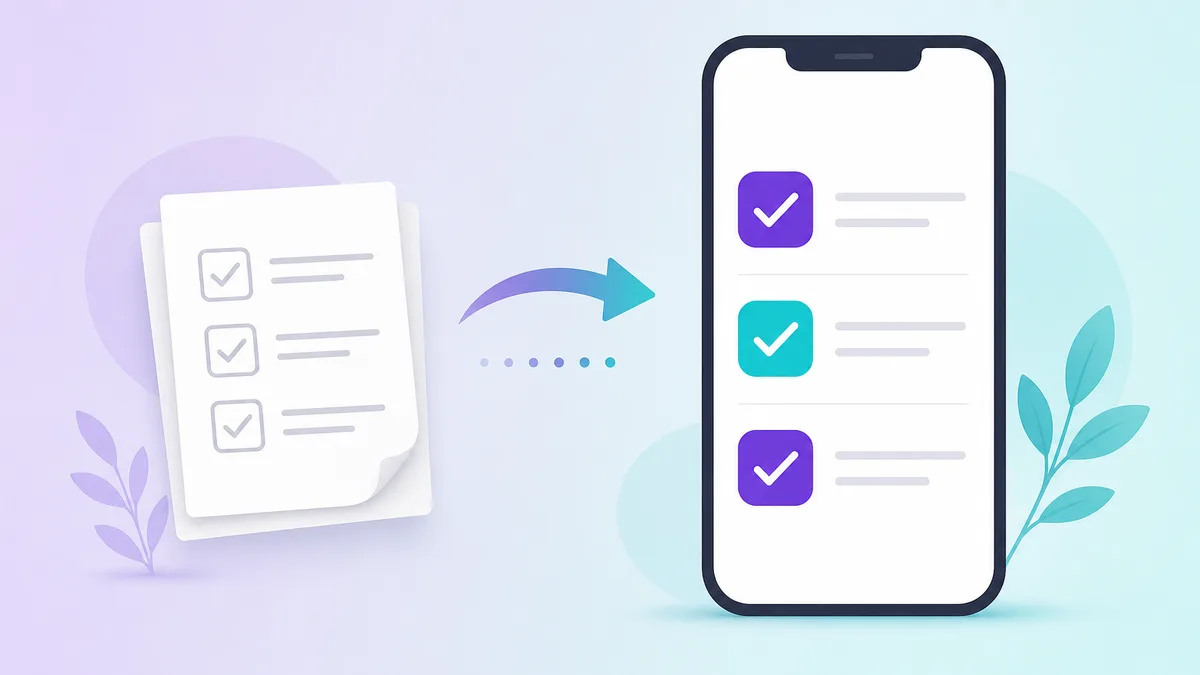
Most still do that on paper. This article walks through what a digital HACCP log looks like in practice, why it’s becoming the norm for multi-branch groups in Riyadh, Jeddah and the Eastern Province, and how to switch without disrupting service.
This article describes common practice and is not legal advice. Requirements vary by municipality and business type; always confirm current regulations with the relevant authority.
What inspectors are actually looking for
A HACCP-based food-safety system comes down to a handful of records kept consistently:
- Receiving logs: temperature and condition of chilled and frozen deliveries, supplier, time, who checked.
- Cold-holding logs: fridge, walk-in and freezer temperatures at set intervals, with corrective action when a reading is out of range (chilled food at or below 5°C is the common benchmark).
- Cooking and hot-holding logs: core temperatures reached and hot food held at or above 60°C.
- Cooling logs: time and temperature as cooked food is brought down for storage.
- Cleaning and sanitation schedules: what was cleaned, when, by whom, with what.
- Personal hygiene and training records: health certificates, hand-washing compliance, training completion.
- Pest control and maintenance records.
- Corrective actions: what went wrong, what was done, who signed it off.
The inspector’s questions are simple: Is the record complete? Is it credible? Can you find it? Paper struggles with all three.
Why paper HACCP logs fail in a growing group
Paper works, barely, in a single kitchen with a diligent head chef. It breaks under the conditions most Saudi operators now face:
- Multiple branches in multiple cities. Head office cannot see whether the Dammam branch logged its fridge temperatures this morning without someone sending a photo.
- High staff turnover and localization programs. New team members need guided routines, not a binder and a verbal explanation.
- Rapid openings. A new branch needs the full food-safety routine running from its first shift.
- Pencil-whipping. A column of identical readings written in one sitting at the end of the shift is easy to spot and impossible to defend.
- Retrieval. When an inspector asks for the last three months of cooling logs, “it’s in the office somewhere” is not an answer.
What a digital HACCP log looks like
A digital log is the same record, captured on a phone at the moment the check happens:
- Scheduled prompts. The fridge check appears on the right person’s phone at 7:00, 11:00, 15:00 and 19:00. Nothing relies on memory.
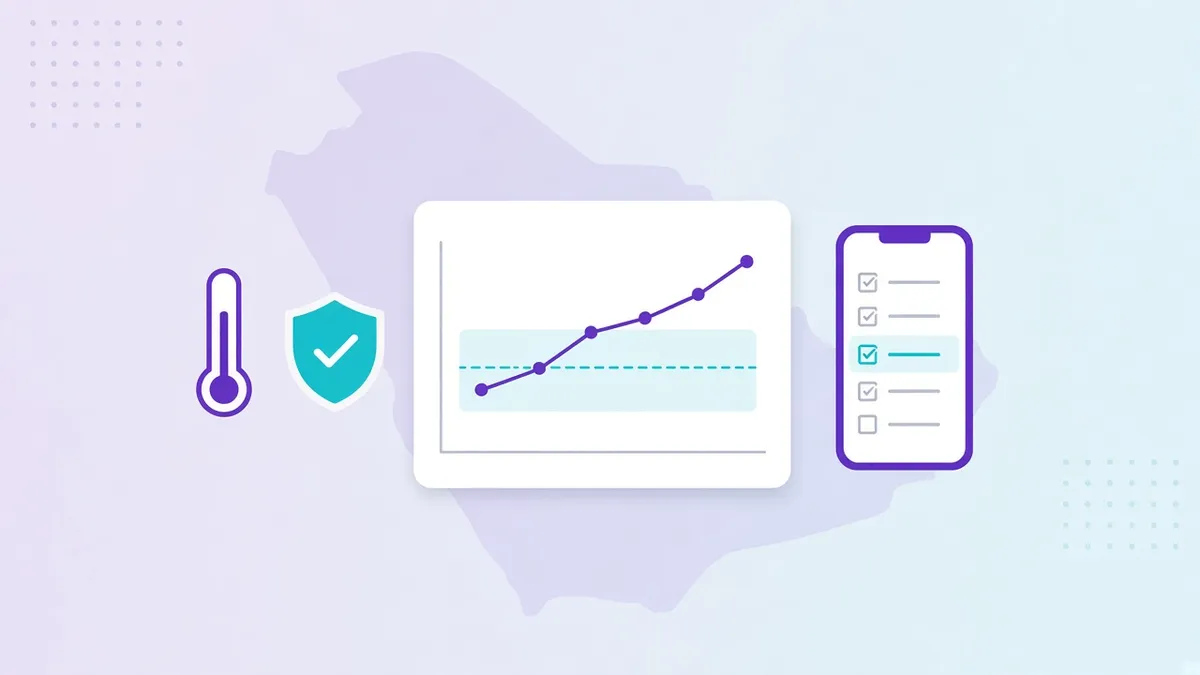
- Structured input. The reading is entered as a number, with the acceptable range built in. An out-of-range value immediately triggers a corrective-action step.
- Proof. Each entry is stamped with the user, the time and, where required, a photo of the thermometer display.
- Automatic history. Every entry is stored and searchable by branch, equipment and date, typically for a year or more.
- Visibility. A regional manager in Riyadh sees completion and exceptions across every branch in real time on a dashboard, without calling anyone.
In Opscale, this runs through task and checklist management for recurring logs, the logbook for incidents and corrective actions, and inspections for internal audits scored the same way in every city.
Mapping the HACCP records to digital routines
| HACCP record | How it runs digitally | Proof captured |
|---|---|---|
| Receiving | Checklist on delivery with temperature fields and accept/reject | User, time, temp, photo of label |
| Cold holding | Recurring task every 4 hours per unit | User, time, reading, out-of-range flag |
| Cooking / hot holding | Task per batch or per service period | Core temp, time |
| Cooling | Two-stage timed task | Start/end temps and times |
| Cleaning | Daily, weekly and monthly scheduled tasks by area | User, time, photo |
| Corrective action | Triggered automatically on failure; logged in the logbook | Description, action, sign-off |
| Internal audit | Weighted inspection template | Score, photos, follow-up tasks |
The Saudi-specific details worth planning for
- Arabic and English. Teams are multilingual; procedures and task names should be available in both. Opscale supports Arabic content and provides support in Arabic.
- Ramadan and seasonal hours. Operating windows shift, so log schedules must shift with them rather than firing at 7 a.m. to an empty kitchen.
- Multi-city, multi-brand structures. Each brand may have its own standard, but head office needs one comparable view.
- Franchise relationships. Franchisors increasingly ask franchisees for digital evidence of brand standards, not just inspection outcomes.
Our Saudi Arabia page covers how Opscale is used across the Kingdom in more detail.
How to switch without disrupting service
- Start with cold holding. It’s the highest-frequency, highest-risk record and the easiest to digitize.
- Recreate your current logs as-is. Don’t redesign the process on day one; make the existing one provable first.
- Pilot in one branch for two weeks. Fix the schedule and the wording with the team that uses it.
- Roll out by region. Use the pilot branch’s template everywhere; a central change updates every location.
- Review exceptions daily. The out-of-range readings and missed checks are where the value is.
The bottom line
A digital HACCP system doesn’t change what the SFDA or your municipality expects. It changes whether you can prove it, instantly, for every branch. For a group adding locations across the Kingdom, that’s the difference between inspection as a routine event and inspection as a scramble.
See how it works for restaurants and cloud kitchens, or book a demo and we’ll build your cold-holding log live on the call.
Related reading: the logs above are only as good as the procedures behind them. See food safety SOPs in Saudi Arabia, how to train staff on SOPs and prove compliance and the full SOP guide and template.