
Walk into two stores of the same retail chain in the same city and you can usually tell within thirty seconds which one has a strong manager. The shelves are faced, the promotion is where the planogram says, the queue is moving, the fitting rooms are clear. The point of standard operating procedures in retail is to make that thirty-second impression the same in every store, including the ones whose manager is on leave or new this month.
Retail SOPs are less about safety than restaurant SOPs and more about presentation, stock accuracy and money. Here are the ones a chain needs, what the standard is for each, and what proof it should leave. For the method see how to write an SOP; for definitions see our guide to standard operating procedures.
1. Store opening
Covers: alarm and unlock, lights, music and digital screens, POS and payment terminals up, float counted, floor walk against the daily standard (facing, signage, promotions, cleanliness), fitting rooms and restrooms checked, staff briefing with the day’s targets and promotions, doors open on time.
Standard: store ready to the photo standard before the door opens; float counted by two people.
Proof: opening floor-walk photos of defined zones (entrance, promo bay, till area), float signature, open-on-time timestamp.
2. Visual merchandising and planogram compliance
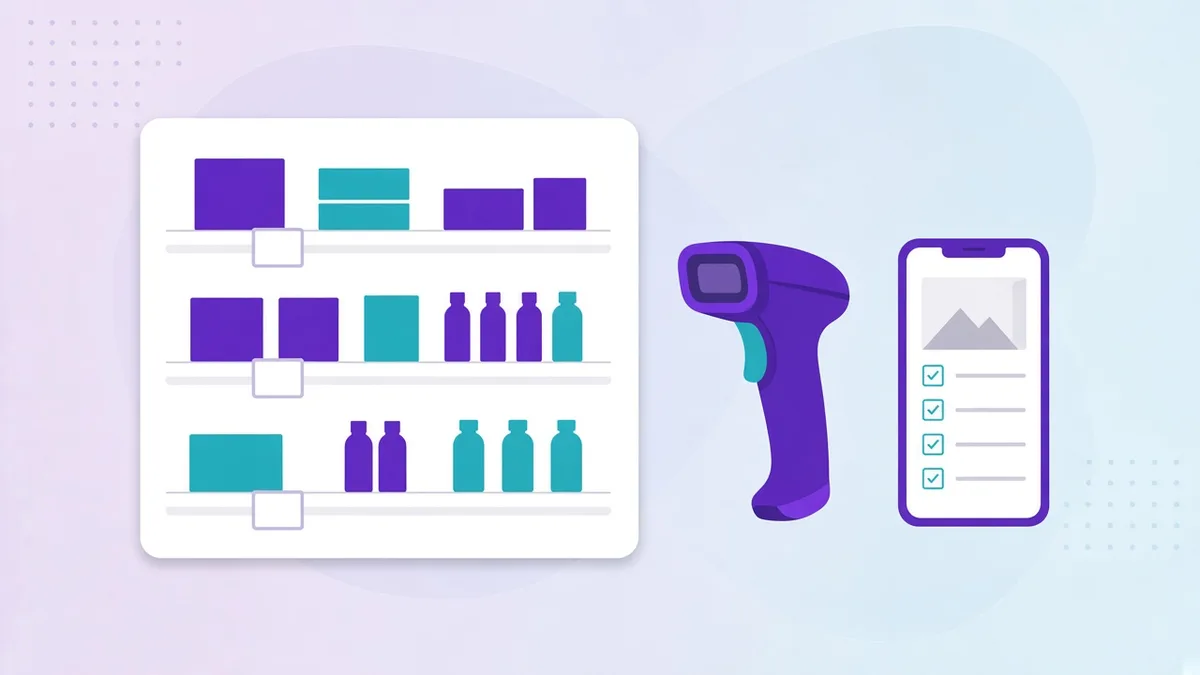
Covers: planogram implementation for each bay, promotion set-up and take-down dates, signage and price tickets, mannequins and displays, window changes.
Standard: each bay matches the current planogram; every promotion live on its start date and removed on its end date; no missing or incorrect price tickets.
Proof: photo per bay against the planogram image at set-up and in a weekly check; promotion go-live confirmation per store.
This is the SOP head office cares about most and sees least. Photo proof per bay is the only way a visual merchandising team can verify thirty stores without visiting them.
3. Replenishment and shelf availability
Covers: delivery receipt and put-away, back-of-house organisation, replenishment rounds during trading, gap checks, top-up priorities.
Standard: deliveries put away within a defined window; gap check at set times with top-ups done or stock-outs logged; no empty facings on key lines.
Proof: put-away completion timestamp; gap-check counts; stock-out log feeding the buying team.
4. Stock counts and shrink control
Covers: cycle-count schedule by category, full count procedure, variance investigation, damages and write-offs, returns to supplier, known-loss recording.
Standard: cycle counts completed on schedule; variances above a threshold investigated and signed off by the manager; write-offs recorded with reason and photo.
Proof: count sheets with timestamps and user, variance sign-off, write-off photos.
5. Cash handling and end-of-day
Covers: floats, drops, voids and discounts authority, end-of-day reconciliation, safe procedure, banking, card and wallet settlements.
Standard: two-person counts; variance tolerance; voids and discounts above thresholds approved; reconciliation completed before leaving.
Proof: signed counts, variance explanations, photo of the reconciliation report.
6. Refunds, exchanges and customer complaints
Covers: refund and exchange policy, required checks (receipt, condition, timeframe), authority levels, how complaints are logged and escalated, follow-up.
Standard: policy applied identically in every store; every complaint logged with category and outcome; defined escalation path.
Proof: refund records with approver; complaint entries in the logbook reviewed weekly for patterns by store.
Refund consistency is a brand issue. A policy applied generously in one store and strictly in another produces both losses and complaints.
7. Customer service standard
Covers: greeting, approach, product knowledge expectations, queue management and when to open a second till, fitting room service, click-and-collect and returns handling, closing the sale.
Standard: greeting within a defined time; second till opened when the queue reaches a defined length; click-and-collect orders ready within the promised window.
Proof: mostly observational: a weekly scored store visit by the area manager using one form across all stores, plus mystery shopping.
8. Loss prevention and security
Covers: bag checks, tagging and detagging, high-value item handling, CCTV checks, key control, back-door procedure, incident reporting for theft or aggression.
Standard: high-value items tagged and counted daily; back door locked and alarmed outside deliveries; incidents reported within the shift.
Proof: daily high-value count; back-door photo at closing; incident reports with time and photos.
9. Health, safety and housekeeping
Covers: cleaning schedule for sales floor, fitting rooms and restrooms; spill procedure; ladder and stockroom safety; fire exits clear; first-aid kit stocked.
Standard: restrooms checked and recorded at set intervals; fire exits photographed clear daily; spills handled within minutes with signage.
Proof: restroom check timestamps, fire exit photos, cleaning completion.
10. Store closing
Covers: last-customer procedure, floor recovery and facing for the morning, fitting rooms cleared, tills closed and reconciled, screens and music off, back door, alarm set.
Standard: store recovered to the opening standard before leaving; cash closed by two people; alarm set on time.
Proof: recovery photos of the defined zones, cash close signatures, alarm-set timestamp.
11. Equipment and maintenance
Covers: POS and terminal faults, lighting, air conditioning, fixtures, signage, how to raise a request and track it.
Standard: faults raised the same day with photo; defined response targets by category.
Proof: maintenance requests with photos and resolution times through requests and approvals.
What is different about retail
- Presentation is the product. Photo standards per zone and per bay are the backbone of retail SOPs in a way they are not in food.
- Promotions have dates. SOPs must be scheduled to appear on the go-live and take-down days at every store at once, which is exactly what role- and date-based task assignment does.
- Area managers cannot be everywhere. Photo proof and one shared inspection form let them see thirty stores from a dashboard and spend their visits coaching rather than checking.
- Stock accuracy drives everything. Cycle counts and stock-out logs are SOPs with direct commercial impact.
Running the chain on SOPs
Centralise the planograms, photo standards and SOPs in one library with short videos. Build opening, closing, replenishment rounds, cycle counts and promotion changes as scheduled tasks assigned to the store manager, supervisor and floor roles at every store. Run one scored store-visit form across all stores. Review completion, exceptions and visit scores by store every week.
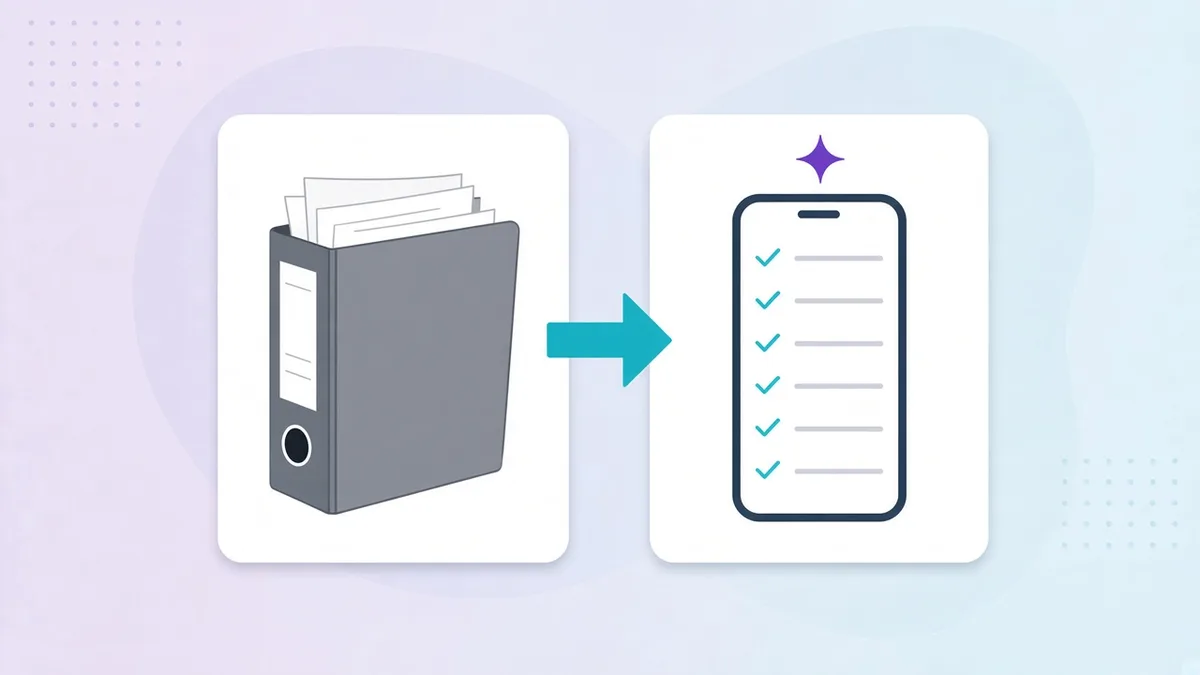
In Opscale, that is the operations library for standards and planograms, tasks and checklists for scheduled routines with photo proof, inspections for store visits, the logbook for complaints and incidents, and the executive dashboard for the per-store view. The AI checklist creator will draft any of these from your current store manual. More on how chains in the region use it on our retail page.
Every store should pass the thirty-second test. SOPs are how it stops depending on which manager is on shift.